
Winch Out Service Edmonton: What to Do When Your Car Gets Stuck
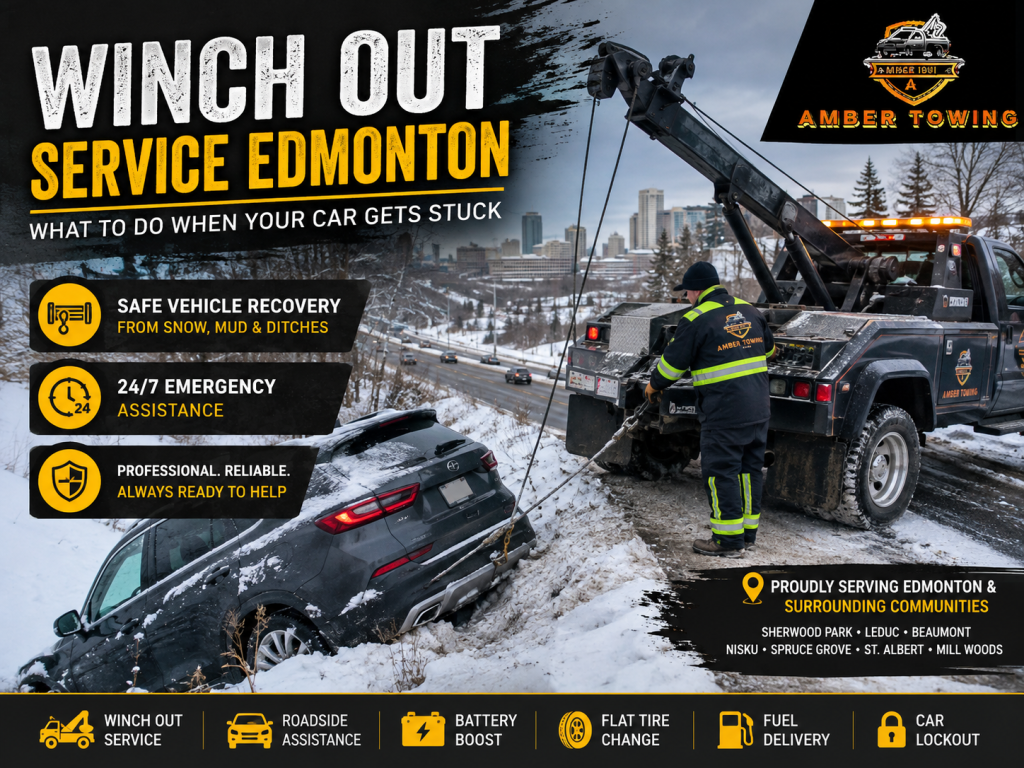
Finding your vehicle buried in deep snow, stuck in mud, trapped in a roadside ditch, or unable to move on an icy road can quickly turn a normal day into a stressful situation. Whether you’re driving through downtown streets, navigating residential neighbourhoods, or travelling along Anthony Henday Drive, Yellowhead Trail, Whitemud Drive, or Highway 16, getting stuck is more common than many Edmonton drivers realize. A professional Winch Out Service Edmonton helps recover your vehicle safely without causing unnecessary damage, allowing you to continue your journey with confidence.
At Amber Towing, vehicle recovery is more than simply pulling a car free. Every recovery begins with assessing the surrounding terrain, the vehicle’s position, weather conditions, and the safest recovery angle. This careful approach protects your vehicle while reducing risks to nearby traffic and pedestrians. From compact cars and SUVs to pickup trucks and commercial vans, professional recovery equipment makes a significant difference when conditions become challenging.
What Is Winch Out Service Edmonton?
A winch out service is a specialized vehicle recovery solution designed to pull vehicles that cannot move under their own power because they are stuck rather than mechanically broken down. Unlike standard towing, a recovery operation uses a heavy-duty hydraulic or electric winch attached to a recovery truck. A high-strength steel cable or synthetic recovery rope gradually pulls the vehicle back onto stable ground.
This service is commonly required when vehicles become trapped in snowbanks, muddy construction zones, loose gravel, icy parking lots, steep embankments, or roadside ditches. Edmonton’s changing weather creates ideal conditions for these incidents, especially during winter storms and spring thaw.
Many drivers assume they need Tow Truck in Edmonton services immediately after becoming stuck. In reality, a professional recovery often comes first. Once the vehicle is safely back on solid ground, technicians determine whether it can continue driving or if additional Car Towing Edmonton is necessary.
Why Vehicles Commonly Get Stuck in Edmonton
Edmonton experiences some of Canada’s most unpredictable driving conditions. A sunny afternoon can quickly become freezing rain or heavy snowfall, making roads unexpectedly hazardous.
Winter remains the leading cause of vehicle recoveries. Fresh snow often hides curbs, deep ruts, drainage ditches, and soft shoulders. Drivers may believe the surface beneath their tires is firm when it is actually loose snow covering ice or frozen mud.
Spring introduces another challenge. Melting snow saturates fields, gravel roads, back alleys, and construction entrances, creating thick mud capable of trapping even four-wheel-drive vehicles.
Heavy rainfall during summer creates slippery shoulders and waterlogged terrain throughout parks, recreational areas, and rural properties surrounding Edmonton.
Even experienced drivers occasionally misjudge parking lots after major snowfalls, where accumulated snow beneath vehicles reduces traction despite winter tires.
Why Professional Recovery Matters More Than DIY Pulling
Attempting to free a stuck vehicle without proper equipment often creates additional problems. Excessive wheel spin digs tires deeper into snow or mud while increasing stress on transmissions, differentials, and drivetrain components.
Many people attempt recoveries using tow straps attached to bumpers or suspension parts. Modern vehicles are rarely designed for this type of force. Improper attachment points can bend frames, damage steering systems, or tear away bumpers.
Professional recovery trucks use manufacturer-approved recovery points whenever possible. Operators understand weight distribution, cable angles, traction requirements, and load limits. The recovery is performed slowly and steadily, minimizing stress on the vehicle.
A controlled recovery also improves safety. Recovery cables operate under tremendous tension, making proper equipment and operator experience essential.
How Professional Winch Recovery Works
Every recovery begins with evaluating the surrounding environment. Operators inspect road conditions, vehicle position, traffic flow, ground stability, nearby obstacles, and weather before positioning the recovery truck.
The tow operator then secures the truck on stable ground using stabilizers if necessary. The recovery cable is attached to approved recovery points designed by the vehicle manufacturer whenever available.
Rather than pulling aggressively, controlled winching gradually applies tension until the vehicle begins moving. Drivers may be instructed to steer gently or lightly accelerate to assist the recovery when appropriate.
Once the vehicle reaches stable pavement or firm ground, technicians inspect it for visible damage. If everything appears safe, many vehicles can continue driving immediately. When mechanical issues remain, Flatbed Towing Edmonton or Local and Long-Distance Towing may be recommended.
Situations That Often Require Winch Out Services
Vehicle recovery is needed in far more situations than drivers expect.
One of the most common incidents involves vehicles sliding into roadside ditches after losing traction on icy roads. These recoveries frequently occur along rural highways surrounding Edmonton, including routes connecting Sherwood Park, Leduc, Beaumont, Nisku, Spruce Grove, and St. Albert.
Residential neighbourhoods also experience numerous recoveries after snowstorms. Deep windrows left by snowplows can trap smaller vehicles attempting to enter driveways or street parking spaces.
Construction sites create another frequent recovery scenario. Delivery vans, pickup trucks, and contractor vehicles often become stuck in loose gravel or soft soil after heavy rain.
Outdoor recreational areas, campsites, river access roads, and unpaved parking lots near the North Saskatchewan River also present recovery challenges throughout the year.
Commercial parking lots covered with compacted ice can leave vehicles stranded despite having winter tires.
Different Vehicles That May Need Recovery
Vehicle recovery is not limited to passenger cars.
Compact sedans with low ground clearance frequently become high-centred on packed snow. SUVs may appear capable of handling deep snow but can still lose traction when all four tires lose contact with solid ground.
Pickup trucks often become stuck because of reduced weight over the rear axle during winter. Cargo vans delivering throughout Edmonton occasionally encounter muddy job sites where traction disappears unexpectedly.
Electric vehicles require special consideration during recovery because of their battery placement and manufacturer-approved recovery procedures.
Motorhomes, trailers, and small commercial vehicles also require specialized recovery planning due to their size and weight.
Professional operators select recovery equipment based on vehicle weight, suspension design, ground conditions, and available recovery angles.
Benefits of Calling a Professional Recovery Service
Choosing experienced recovery professionals offers advantages beyond simply getting unstuck.
Proper equipment significantly reduces the chance of vehicle damage during recovery. Modern recovery trucks carry multiple winches, recovery straps, snatch blocks, traction equipment, and protective accessories designed for different situations.
Experienced operators understand Edmonton’s road network and seasonal hazards, allowing them to reach stranded motorists efficiently even during severe weather.
Professional recovery services also provide peace of mind during stressful roadside emergencies. Instead of experimenting with unsafe recovery methods, drivers receive assistance from trained operators who prioritize safety throughout the process.
Another benefit is flexibility. If recovery reveals additional problems such as suspension damage, tire failure, or mechanical breakdown, the same provider can often arrange Emergency Towing IN EDMONTON, roadside assistance edmonton, Battery Boosting Edmonton, Flat Tire Change Edmonton, Jump Start in Edmonton, Car Lockout Service Edmonton, Fuel Delivery in Edmonton, or complete Accident Towing Edmonton without requiring a second service call.
Winch Out Service vs Traditional Towing
Many people confuse recovery with towing, but they solve different problems.
A winch out service is intended for vehicles that cannot move because they are physically trapped by terrain or road conditions. Once recovered, the vehicle may be perfectly drivable.
Traditional towing becomes necessary when a vehicle has mechanical failure, collision damage, overheating issues, transmission failure, or other problems preventing safe operation.
In some situations, both services are required. A vehicle recovered from a snowy ditch may have suspension damage or a punctured tire that makes towing the safest option. Professional providers offering Edmonton towing, 24/7 towing Edmonton, towing service Edmonton, and cheap towing service edmonton can assess the situation and recommend the most appropriate solution, helping drivers avoid unnecessary costs while ensuring their vehicle is transported safely.
What Does a Winch Out Service Cost in Edmonton?
The cost of a Winch Out Service Edmonton depends on the complexity of the recovery rather than just the distance travelled. A vehicle that is lightly stuck in a snowbank on a residential street can usually be recovered much faster than one buried in deep mud or resting in a steep roadside ditch. Recovery companies also consider the amount of equipment required, the time spent on-site, weather conditions, traffic management, and whether additional towing is necessary after the recovery.
Time of day can also influence pricing. Recoveries requested during severe snowstorms, overnight hours, or in remote locations may involve additional operational costs because drivers must travel farther or work in more hazardous conditions. If specialized equipment such as multiple winches, recovery boards, or heavy-duty recovery trucks is required, the final price may also increase.
The best approach is to describe your situation accurately when calling for assistance. Let the dispatcher know where your vehicle is located, whether it is stuck in snow, mud, ice, sand, or a ditch, and if there is any visible damage. Providing clear information allows the recovery team to send the right truck on the first visit, reducing delays and helping avoid unnecessary expenses.
Factors That Affect Recovery Pricing
Every recovery is unique. Even two vehicles stuck only a few kilometres apart can require completely different recovery methods.
Ground conditions play a significant role. A vehicle resting on firm snow may be recovered in minutes, while one buried to its frame in mud requires additional planning and equipment. Vehicle size also matters because recovering a heavy pickup truck or commercial van generally requires greater pulling capacity than recovering a compact sedan.
Accessibility is another important consideration. Vehicles trapped in underground parking entrances, narrow alleyways, construction sites, wooded areas, or beside busy highways require additional safety precautions. Edmonton’s winter weather can further complicate recoveries, especially when blowing snow reduces visibility or freezing temperatures create dangerous working conditions.
If a vehicle cannot be driven after being recovered, additional services such as Flatbed Towing Edmonton or Local and Long-Distance Towing may be recommended to transport it safely.
Common Mistakes Drivers Make When Their Vehicle Gets Stuck
One of the biggest mistakes is pressing the accelerator harder in an attempt to power out. Excessive wheel spin usually pushes the tires deeper into snow, mud, or loose gravel while polishing the surface beneath them, making traction even worse.
Another common mistake is accepting recovery assistance from vehicles without proper equipment. A standard pickup truck connected with an inexpensive tow strap can create dangerous shock loads that damage both vehicles if the strap suddenly snaps or the attachment point fails.
Some drivers also stand too close during recovery. Recovery cables, hooks, and straps are under significant tension. Everyone except the recovery operator should remain at a safe distance until the vehicle has been safely recovered.
Ignoring warning signs before becoming stuck is another frequent issue. Drivers sometimes continue into unplowed parking lots, flooded roads, muddy work sites, or deep snow because another vehicle previously passed through. Road conditions can change rapidly, particularly during Edmonton’s freeze-thaw cycles.
Expert Tips to Avoid Getting Stuck
Prevention is always easier than recovery. Before driving during winter, check Edmonton’s weather forecast and road reports, especially if travelling early in the morning or late at night when temperatures are lowest.
Maintain quality winter tires with sufficient tread depth. While all-season tires may perform adequately in mild weather, dedicated winter tires provide significantly better grip on snow and ice. However, even the best tires cannot overcome poor driving habits or unsafe road conditions.
Avoid sudden acceleration when driving through deep snow. Gentle throttle inputs allow the tires to maintain traction instead of digging into the surface. If you notice your vehicle beginning to lose momentum, avoid stopping unless absolutely necessary because restarting on slippery terrain is often more difficult.
Keep an emergency kit in your vehicle throughout the year. Items such as a flashlight, warm blankets, gloves, a phone charger, bottled water, reflective triangles, and a small snow shovel can make a roadside emergency much safer while waiting for professional assistance.
Professional Advice from Recovery Experts
Experienced recovery operators recommend staying calm immediately after becoming stuck. Panicking often leads drivers to make decisions that worsen the situation.
If your vehicle is stuck on a busy roadway like Anthony Henday Drive, Whitemud Drive, Yellowhead Trail, Calgary Trail, Gateway Boulevard, or Highway 2, your first priority should always be personal safety. Turn on your hazard lights, remain visible, and move to a safe location whenever possible.
Avoid crawling underneath the vehicle or attempting to place objects beneath spinning tires while someone presses the accelerator. These actions can lead to serious injuries.
When contacting Amber Towing, provide accurate information about your vehicle, your exact location, nearby landmarks, road conditions, and whether the vehicle has suffered any mechanical damage. This information allows the recovery team to arrive fully prepared.
Safety Recommendations During Vehicle Recovery
Safety should never be compromised for speed. Once a recovery truck arrives, follow the operator’s instructions carefully.
Passengers should exit the vehicle if instructed and move well away from the recovery area. Recovery cables can store tremendous energy under tension, making proper safety distances essential.
Do not attempt to assist by pushing the vehicle unless specifically requested. Recovery operators carefully calculate pulling angles and vehicle movement. Unexpected actions from bystanders can interfere with a safe recovery.
Once your vehicle has been recovered, inspect it before continuing your trip. Check for leaking fluids, damaged tires, steering problems, unusual warning lights, or visible suspension damage. If anything appears abnormal, arranging Car Towing Edmonton is often the safest decision.
Local Edmonton Considerations
Driving conditions in Edmonton present unique recovery challenges throughout the year. Winter snowstorms frequently create drifting snow on exposed roadways, while spring thaw leaves gravel roads and construction entrances saturated with water.
Neighbourhoods with steep grades or older residential streets often become slippery after freezing rain. Industrial areas around Nisku and expanding construction zones near the city’s outskirts can also create difficult recovery situations because of loose gravel and soft ground.
Drivers travelling between Edmonton and surrounding communities such as Sherwood Park, Leduc, Beaumont, Spruce Grove, St. Albert, and Mill Woods should be especially cautious during changing weather conditions. Open highways can experience blowing snow that reduces visibility and hides icy patches beneath fresh snowfall.
Understanding Alberta’s winter driving conditions and reducing speed during poor weather significantly lowers the likelihood of needing emergency vehicle recovery.
Seasonal Advice for Edmonton Drivers
Each season brings different recovery risks. Winter naturally generates the highest number of winch out requests because snow, black ice, and frozen shoulders reduce traction across the city.
Spring introduces hidden hazards as melting snow softens unpaved roads, rural properties, and construction entrances. What appears to be dry ground may actually conceal deep mud capable of trapping even larger vehicles.
Summer thunderstorms can quickly flood underpasses, parking lots, and gravel access roads. Driving through standing water should always be avoided because hidden potholes and soft shoulders can leave vehicles stranded.
Autumn often catches drivers off guard. Early morning frost combined with falling leaves creates slippery road surfaces long before the first major snowfall arrives. Preparing your vehicle before temperatures drop can reduce the chances of requiring roadside assistance.
Frequently Asked Questions
1. What is a Winch Out Service Edmonton?
A Winch Out Service Edmonton is a professional vehicle recovery service used when a car, SUV, truck, or van becomes stuck in snow, mud, sand, ice, a ditch, or another location where it cannot move under its own power. Instead of towing the vehicle immediately, a recovery truck uses a heavy-duty winch and recovery equipment to safely pull the vehicle back onto stable ground. Once recovered, the operator checks whether the vehicle can be driven or if additional towing is needed.
2. When should I call a winch out service instead of trying to free my vehicle myself?
If your vehicle is stuck deep in snow, mud, a ditch, or on an icy slope, it is usually safer to call a professional recovery service. Spinning your tires or using improper tow straps can damage the transmission, suspension, drivetrain, or bumpers. Professional recovery operators use the correct attachment points and equipment to recover the vehicle while reducing the risk of additional damage or injury.
3. How much does a winch out service cost in Edmonton?
The price depends on several factors, including how deeply the vehicle is stuck, the type of terrain, weather conditions, vehicle size, accessibility, and whether towing is required afterward. Recoveries that require additional equipment or occur during severe weather or overnight may cost more than straightforward roadside recoveries. Contacting the towing company with accurate information allows them to provide the most appropriate estimate.
4. Can my vehicle be damaged during a winch recovery?
When performed by trained professionals using proper recovery procedures, vehicle damage is minimized. Recovery operators inspect the vehicle, choose approved recovery points, and apply steady pulling force rather than sudden jerks. Damage is more likely to occur during improper DIY recoveries using incorrect attachment points or unsuitable equipment.
5. Does four-wheel drive prevent vehicles from getting stuck?
No. Four-wheel drive improves traction, but it cannot overcome deep snow, thick mud, black ice, or poor ground conditions. Many SUVs and pickup trucks require professional recovery every winter because all four wheels lose traction or the vehicle becomes high-centered. Safe driving habits remain just as important as the type of drivetrain your vehicle has.
6. What information should I provide when calling for recovery?
Provide your exact location, nearby landmarks, the type of vehicle, road conditions, and whether the vehicle is stuck in snow, mud, a ditch, or another surface. Mention any visible damage or hazards such as traffic, steep slopes, or water. Accurate information helps the dispatcher send the right recovery truck and equipment, reducing response times and improving safety.
7. Can a winch out service recover electric vehicles?
Yes. Electric vehicles can be recovered safely, but they require extra care because of their battery systems and manufacturer recovery guidelines. Professional recovery operators understand where approved recovery points are located and avoid procedures that could damage battery components or other sensitive systems during the recovery process.
8. Is a winch out service available during winter storms?
Yes. Professional recovery companies operate throughout the year, including during heavy snowfall, freezing rain, and severe winter weather. Winter is one of the busiest seasons for vehicle recovery in Edmonton because snowbanks, icy roads, and drifting snow frequently cause vehicles to lose traction. Response times may be longer during major storms due to increased demand.
9. Will my roadside assistance or insurance cover a winch out service?
Some roadside assistance memberships and auto insurance policies may cover all or part of a vehicle recovery, depending on your coverage. It is a good idea to review your policy before an emergency occurs. If your plan includes roadside assistance, keep your membership details accessible so you can quickly determine whether recovery costs are covered.
10. What other roadside services are available if my vehicle cannot be driven afterward?
If the vehicle cannot safely continue after recovery, many towing providers can also perform Car Towing Edmonton, Flatbed Towing Edmonton, Emergency Towing IN EDMONTON, Battery Boosting Edmonton, Flat Tire Change Edmonton, Jump Start in Edmonton, Fuel Delivery in Edmonton, and Car Lockout Service Edmonton. Having multiple roadside services available from one provider reduces delays and simplifies the recovery process.
Conclusion
Getting stuck is frustrating, but it does not have to become a major ordeal. Whether your vehicle is trapped in deep snow after an Edmonton blizzard, buried in mud at a construction site, or resting in a roadside ditch after losing traction, acting quickly and safely makes all the difference. A professional Winch Out Service Edmonton is designed to recover vehicles efficiently while protecting both the vehicle and everyone involved.
At Amber Towing, the focus is on safe, professional vehicle recovery across Edmonton and surrounding communities. From passenger cars and SUVs to pickup trucks and commercial vehicles, experienced recovery operators assess every situation carefully before selecting the safest recovery method. Whether you require towing companies edmonton alberta, Tow truck Edmonton, Towing service Edmonton, Emergency towing Edmonton, or complete roadside assistance after a recovery, choosing experienced professionals helps you get back on the road with confidence and peace of mind.