
Fuel Delivery Edmonton: Your Complete 24/7 Emergency Fuel Service Guide
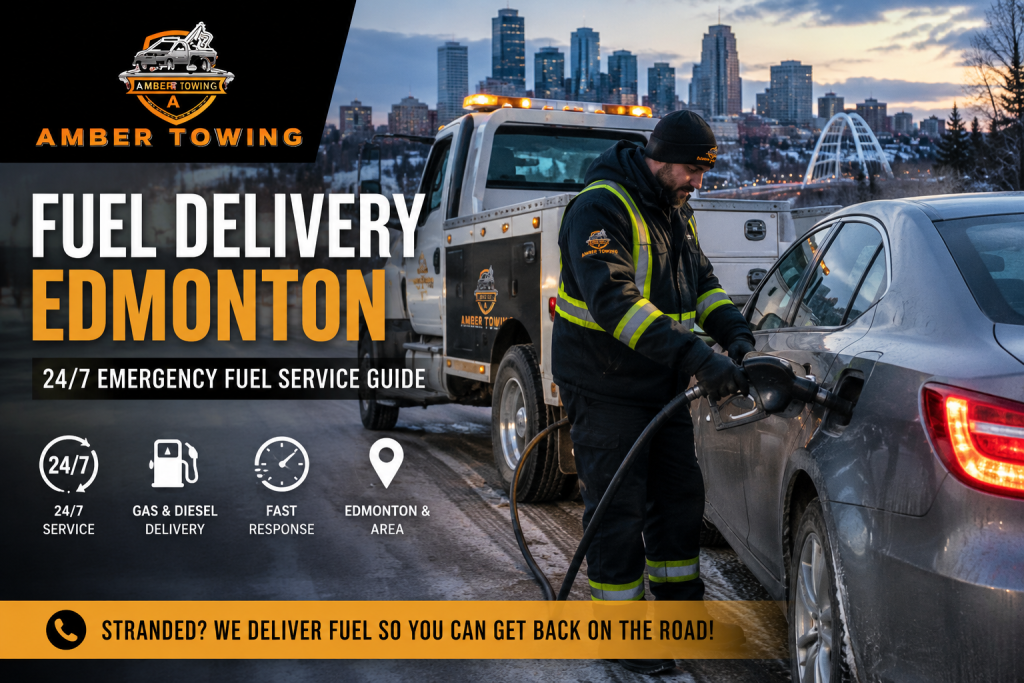
Running out of fuel is one of the most common roadside emergencies, and it often happens when drivers least expect it. Whether you’re caught in heavy traffic on Anthony Henday Drive, commuting along Yellowhead Trail, travelling through Whitemud Drive, or heading home after a long day, Fuel Delivery Edmonton services provide a fast and practical solution without the need to leave your vehicle or search for the nearest gas station. Professional roadside technicians can deliver fuel directly to your location, helping you continue your journey safely while reducing unnecessary risks on busy Alberta roads.
Fuel Delivery Edmonton: Why This Service Matters
Running out of fuel is more than an inconvenience. It can quickly become a safety concern, especially during Edmonton’s cold winters, heavy snowfall, freezing rain, or periods of poor visibility. Vehicles stopped on high-speed roads such as Anthony Henday Drive, Yellowhead Trail, Highway 16, Calgary Trail, Gateway Boulevard, and the QEII Highway are exposed to moving traffic, making immediate assistance important for both driver and passenger safety.
Modern vehicles are also becoming more sensitive to operating with extremely low fuel levels. While many vehicles display fuel warnings well before the tank is empty, unexpected detours, road closures, traffic congestion, construction zones, inaccurate fuel gauges, and changing weather conditions can still leave drivers stranded. Professional roadside fuel delivery reduces the time spent in unsafe locations while providing enough fuel to reach the nearest service station safely.
Unlike attempting to walk to a gas station with a fuel container, roadside fuel delivery minimizes personal risk. Walking along major highways or busy intersections can be dangerous, particularly at night or during winter storms. Staying inside a safe vehicle whenever possible while waiting for trained roadside professionals is generally the safer option.
Across Edmonton, drivers frequently require emergency fuel delivery in residential neighbourhoods such as Mill Woods, Windermere, Summerside, Clareview, Terwillegar, Downtown Edmonton, North Edmonton, West Edmonton, South Edmonton, and near commercial districts where traffic delays often increase fuel consumption unexpectedly. Service is also commonly requested in surrounding communities including Sherwood Park Towing, Beaumont Towing, Leduc Towing, Nisku, Spruce Grove, and St. Albert when commuters travel between municipalities.
How Emergency Fuel Delivery Works
Emergency fuel delivery is designed to solve one problem quickly: getting enough fuel into your vehicle so you can safely reach the nearest fuel station. The process begins when a driver contacts a roadside assistance provider and shares their exact location, vehicle type, and fuel requirement. Accurate location information is especially helpful when stopped near major landmarks, shopping centres, industrial parks, or highway exits throughout Edmonton.
After confirming your location, a roadside technician travels directly to your vehicle with approved fuel containers that meet transportation safety standards. Once on site, the technician verifies whether the vehicle requires gasoline or diesel before carefully adding a limited amount of fuel. The quantity is intended to allow the vehicle to restart and travel safely to a nearby service station for a complete refill.
During the visit, technicians often perform a quick visual assessment to ensure that an empty fuel tank is actually the cause of the problem. Occasionally, a vehicle that appears to have run out of fuel may instead require Battery Boosting Edmonton, Jump Start in Edmonton, Car Lockout Service Edmonton, or another form of roadside assistance edmonton. Identifying the correct issue helps avoid unnecessary delays.
If the vehicle cannot be restarted because of mechanical failure, fuel system damage, or another unrelated problem, additional services such as Car Towing Edmonton, Tow Truck in Edmonton, Flatbed Towing Edmonton, Emergency Towing IN EDMONTON, Accident Towing Edmonton, Vehicle recovery Edmonton, or Local and Long-Distance Towing may become the safest next step.
The Benefits of Professional Fuel Delivery
Professional emergency fuel delivery offers convenience, safety, and peace of mind. Instead of arranging transportation to purchase fuel or risking injury while walking beside busy roadways, drivers receive assistance exactly where they are stranded.
Another important advantage is reduced vehicle stress. Some modern fuel systems, particularly diesel engines, may require special procedures after running completely dry. Experienced roadside technicians understand these differences and can advise drivers on the safest next steps before additional mechanical issues develop.
Professional roadside services also improve response efficiency during poor weather. Edmonton winters often bring blowing snow, icy intersections, reduced daylight, and temperatures well below freezing. Remaining inside your vehicle while waiting for trained professionals is usually safer than attempting to solve the problem alone.
Many roadside providers offer multiple services during a single visit. For example, a technician may discover that the vehicle also has a dead battery, a flat tire, or is stuck in deep snow. Having access to Flat Tire Service Edmonton, Winch Out Service Edmonton, Battery Boost Edmonton, and other emergency roadside solutions can save valuable time by resolving several problems during one call.
When Should You Call for Fuel Delivery?
Fuel delivery should be considered as soon as you realize your vehicle cannot safely reach the nearest gas station. Waiting until the vehicle stops completely may increase safety risks, especially on highways with heavy traffic or limited shoulders.
Drivers often require emergency fuel delivery after becoming distracted by long commutes, unexpected road closures, severe weather, extended traffic delays, or inaccurate fuel gauge readings. It is also common during winter because engines consume more fuel while idling to provide cabin heat.
Commercial drivers, delivery vehicles, rideshare operators, families travelling with children, seniors, and motorists unfamiliar with Edmonton may benefit from immediate roadside fuel delivery rather than attempting to locate fuel independently.
Many roadside calls occur near Edmonton International Airport, industrial areas in Nisku, the Yellowhead industrial corridor, shopping centres such as West Edmonton Mall, Rogers Place during major events, Commonwealth Stadium, the University of Alberta area, and busy commuter routes where stopping unexpectedly can create additional hazards.
Professional fuel delivery is also valuable for motorists travelling between Edmonton and surrounding communities. Drivers commuting from Beaumont, Leduc, Sherwood Park, Spruce Grove, St. Albert, or Fort Saskatchewan often cover significant daily distances, increasing the likelihood of unexpected fuel shortages during changing weather or traffic conditions.
Edmonton Conditions That Make Fuel Delivery More Important
Edmonton’s climate presents unique driving challenges throughout the year. Winter temperatures frequently fall below freezing, and prolonged idling during traffic congestion or snow removal operations can consume more fuel than many drivers expect. Strong winds, drifting snow, black ice, and reduced visibility may also increase travel times, making fuel planning more difficult.
Construction season brings another challenge. Road improvements, detours, lane closures, and infrastructure projects can significantly extend travel distances across the city. Drivers who planned enough fuel for a normal commute may unexpectedly find themselves running low after lengthy delays.
Major commuter routes including Anthony Henday Drive, Yellowhead Trail, Whitemud Drive, St. Albert Trail, Calgary Trail, Gateway Boulevard, 97 Street, 137 Avenue, and 170 Street experience changing traffic conditions throughout the day. Fuel consumption often increases during stop-and-go traffic, particularly for larger SUVs, pickup trucks, commercial vans, and towing vehicles.
Edmonton’s surrounding communities also contribute to higher roadside assistance demand. Many residents travel daily between Sherwood Park, Beaumont, Leduc, Nisku, Spruce Grove, and St. Albert for work, education, or business. Longer travel distances naturally increase the chances of unexpected fuel emergencies, making reliable towing service edmonton, tow truck edmonton, and emergency roadside assistance valuable resources when problems occur.
What Does Fuel Delivery Cost in Edmonton?
The cost of Fuel Delivery Edmonton depends on several factors, including your location, the distance a roadside technician must travel, the time of day, weather conditions, and the amount of fuel required. A service call within central Edmonton may differ from one in a rural area outside the city or along Highway 16 or the QEII Highway.
Some roadside assistance providers include a small amount of fuel in the service fee, while others charge separately for the fuel delivered. Additional charges may apply if your vehicle is located in a difficult-to-access area, underground parking structure, construction zone, or requires specialized equipment to reach safely. If the vehicle has another issue besides an empty fuel tank, services such as Emergency towing Edmonton, Car Towing Edmonton, or Vehicle recovery Edmonton may be recommended after an inspection.
The most accurate way to understand the cost is to provide your exact location, vehicle type, and fuel requirement when requesting assistance. This allows the dispatcher to determine the most appropriate response while avoiding unexpected delays.
Factors That Affect Emergency Fuel Delivery Pricing
Location is one of the biggest pricing factors. A vehicle stranded in Downtown Edmonton is generally easier to reach than one on a remote section of Highway 16, near an industrial site in Nisku, or outside city limits toward Beaumont or Leduc.
Weather can also influence response logistics. Heavy snowfall, freezing rain, poor visibility, or major traffic incidents may increase travel time because roadside technicians must operate safely under changing road conditions.
The type of vehicle matters as well. Passenger cars typically require only a small amount of gasoline, while diesel pickup trucks, commercial vans, and larger work vehicles may need different fuel types and handling procedures. Using the wrong fuel can cause expensive mechanical damage, which is why trained technicians always verify fuel requirements before dispensing fuel.
Traffic conditions are another consideration. Large public events, sporting events, concerts, festivals, and rush-hour congestion can affect travel times throughout Edmonton. Choosing a professional roadside assistance provider helps ensure that technicians use the most efficient routes available while prioritizing safety.
Common Mistakes Drivers Make After Running Out of Fuel
Many drivers assume they can continue driving after the low-fuel warning appears for an extended period. Although fuel warning systems provide notice, the remaining driving distance varies depending on vehicle size, driving habits, terrain, weather, and traffic. Relying solely on the estimated range can result in unexpected breakdowns.
Another common mistake is leaving the vehicle on foot to search for a gas station. This can be especially dangerous along busy roads such as Anthony Henday Drive or Yellowhead Trail, particularly after dark or during winter weather. Remaining in a safe location and requesting professional roadside assistance is often the better choice.
Some drivers attempt to accept fuel from strangers or use unapproved containers. Fuel must be transported in approved containers that reduce spill risks and comply with safety standards. Professional roadside technicians arrive equipped with appropriate equipment designed for emergency fuel delivery.
Another overlooked issue is assuming an empty fuel tank is the only problem. If a vehicle has also developed a dead battery after repeated restart attempts, or if another mechanical issue is preventing the engine from starting, additional services such as Battery Boosting Edmonton, Jump Start in Edmonton, or Flat Tire Change Edmonton may be required before the vehicle can continue safely.
Expert Tips to Avoid Running Out of Fuel
Experienced roadside professionals recommend treating the quarter-tank mark as a reminder to refuel rather than waiting for the warning light. This approach provides a greater safety margin during unexpected detours, severe weather, or traffic congestion.
Before beginning longer trips outside Edmonton, check weather forecasts, construction updates, and planned road closures. Travel delays caused by collisions, maintenance work, or winter storms can significantly increase fuel consumption.
Drivers should also become familiar with their vehicle’s fuel range without depending entirely on dashboard estimates. Fuel economy changes depending on outside temperature, tire pressure, towing loads, terrain, and driving style.
Keeping an emergency roadside kit inside the vehicle is another practical precaution. Warm clothing, gloves, blankets, a flashlight, reflective warning devices, a phone charger, and bottled water can improve comfort and safety while waiting for assistance during Alberta’s colder months.
Professional Advice for Edmonton Drivers
Planning ahead remains the most effective way to reduce roadside emergencies. Edmonton’s road network stretches across large residential communities, industrial districts, and surrounding municipalities, making fuel planning particularly important for commuters travelling long distances every day.
Drivers who regularly travel between Edmonton, Sherwood Park, Beaumont, Leduc, Spruce Grove, St. Albert, and Nisku should consider refuelling before leaving urban areas where fuel stations are more readily available. Waiting until reaching unfamiliar locations may increase the risk of becoming stranded.
Commercial drivers, delivery services, contractors, rideshare operators, and fleet vehicles should monitor fuel levels throughout the workday rather than only at the beginning or end of each shift. Small habits often prevent larger roadside problems.
If your vehicle experiences repeated fuel-related issues despite regular refuelling, it may indicate an inaccurate fuel gauge, fuel sender problem, or another mechanical concern. A qualified repair facility should inspect the vehicle to prevent future breakdowns.
Safety Recommendations During a Fuel Emergency
Your first priority should always be personal safety. If the vehicle begins losing power, activate your hazard lights immediately and move to the safest available location without creating additional traffic hazards.
Whenever possible, remain inside the vehicle with your seat belt fastened, especially if stopped on a busy roadway. Exiting the vehicle should only be considered when it can be done safely and local conditions make remaining inside more dangerous.
Provide accurate location details when contacting roadside assistance. Nearby intersections, highway exit numbers, kilometre markers, recognizable businesses, shopping centres, or public landmarks help technicians locate stranded vehicles more quickly.
Avoid smoking or creating open flames near the vehicle while waiting for fuel delivery. Fuel vapours can ignite under the wrong conditions, making proper safety procedures essential during any roadside fuel service.
Seasonal Fuel Delivery Advice for Edmonton
Winter places additional demands on every vehicle. Cold temperatures reduce fuel efficiency, increase engine warm-up times, and encourage longer idling while drivers clear snow or wait for windows to defrost. These factors often lead to unexpectedly higher fuel consumption.
Spring introduces construction season across Edmonton. Lane closures, detours, and infrastructure improvements can add considerable travel time to daily commutes, making fuel planning more important than many drivers realize.
Summer road trips throughout Alberta also increase demand for emergency roadside services. Families travelling to campgrounds, lakes, festivals, or national parks may encounter unfamiliar routes where fuel stations are farther apart than expected.
Autumn brings changing weather conditions, earlier sunsets, and fluctuating temperatures. Preparing for seasonal changes by checking fuel levels before every longer trip helps reduce the likelihood of roadside emergencies as winter approaches.
Fuel Delivery vs. Other Roadside Assistance Services
Fuel delivery is the correct solution when the only issue is an empty fuel tank. After enough gasoline or diesel has been added, most vehicles can continue to the nearest fuel station without additional assistance.
However, not every roadside problem is fuel related. If the engine will not start because of a dead battery, Battery Boost Edmonton or Jump Start in Edmonton is usually the appropriate service. If a tire has been damaged by a pothole or road debris, Flat Tire Service Edmonton provides a faster solution than towing.
Vehicles stuck in deep snow, mud, or a roadside ditch often require Winch Out Edmonton before they can be driven safely again. Following collisions or significant mechanical failures, Accident towing Edmonton, Tow truck Edmonton, 24/7 towing Edmonton, Cheap towing Edmonton, or Edmonton towing services are generally the safest options to transport the vehicle without causing further damage.
Understanding the difference between these roadside services helps drivers request the right assistance the first time, reducing response delays and ensuring the safest outcome.
Frequently Asked Questions
1. What is Fuel Delivery Edmonton, and how does it work?
Fuel Delivery Edmonton is a roadside assistance service that delivers gasoline or diesel directly to drivers who have run out of fuel. After you provide your location and vehicle details, a trained technician brings the correct type of fuel to your vehicle, adds enough to get you moving again, and allows you to drive safely to the nearest fuel station for a complete refill.
2. How quickly can emergency fuel delivery arrive in Edmonton?
Response times vary depending on your location, weather conditions, traffic, and service demand. Drivers in central Edmonton are often reached faster than those in rural areas or outside the city. During snowstorms, major traffic incidents, or large public events, travel times may be longer, but roadside providers always aim to reach stranded motorists as safely and efficiently as possible.
3. How much fuel is usually delivered during an emergency call?
Most roadside assistance providers deliver enough gasoline or diesel to allow you to reach the nearest fuel station safely. The exact amount may vary depending on the service provider, vehicle type, and your location. Emergency fuel delivery is designed to get you back on the road quickly rather than completely filling your fuel tank.
4. Can I request diesel fuel delivery for my truck or commercial vehicle?
Yes. Many roadside assistance companies provide both gasoline and diesel fuel delivery. It is important to tell the dispatcher your vehicle’s make, model, and fuel type before assistance is dispatched. Using the wrong fuel can cause expensive engine damage, so technicians always verify the correct fuel before refueling your vehicle.
5. Is emergency fuel delivery available 24 hours a day in Edmonton?
Many professional roadside assistance providers operate 24 hours a day, including weekends and holidays. This means drivers who run out of fuel late at night, early in the morning, or during severe weather can still receive emergency assistance when fuel stations or other services may be less accessible.
6. What should I do immediately after my vehicle runs out of fuel?
If possible, safely move your vehicle to the shoulder or another secure location. Turn on your hazard lights and stay inside your vehicle if it is safe to do so. Contact a roadside assistance provider and provide accurate location details, including nearby intersections, highway exits, landmarks, or businesses to help technicians find you quickly.
7. Is it safe to walk to the nearest gas station?
In most situations, especially on highways or during poor weather, walking to a gas station is not recommended. Busy roads, reduced visibility, icy conditions, and fast-moving traffic can create serious safety risks. Professional fuel delivery allows you to remain in a safer location while trained technicians bring fuel directly to your vehicle.
8. Can roadside fuel delivery help if my vehicle still won’t start?
Yes. Sometimes an empty fuel tank is not the only issue. If your battery has discharged from repeated start attempts or another mechanical problem exists, the technician may recommend additional roadside services such as a battery boost, towing, or vehicle recovery after inspecting the situation.
9. Does cold weather increase the chances of running out of fuel?
Yes. Edmonton’s winter weather often causes vehicles to consume more fuel because of longer warm-up times, increased idling, slower traffic, and difficult road conditions. Drivers who frequently travel during freezing temperatures should refuel earlier than usual instead of waiting until the fuel warning light appears.
10. Which areas around Edmonton commonly use fuel delivery services?
Emergency fuel delivery is commonly requested throughout Edmonton, including Downtown, Mill Woods, Windermere, Clareview, West Edmonton, North Edmonton, South Edmonton, and along major roads like Anthony Henday Drive and Yellowhead Trail. Service is also frequently available in Sherwood Park, Beaumont, Leduc, Nisku, Spruce Grove, and St. Albert.
11. Can motorcycles, SUVs, and larger trucks use fuel delivery services?
Yes. Fuel delivery services are available for many vehicle types, including motorcycles, passenger cars, SUVs, pickup trucks, commercial vans, and light-duty trucks. Providing accurate vehicle information helps ensure the technician arrives with the appropriate fuel and equipment for your specific vehicle.
12. Will running out of fuel damage my vehicle?
Occasionally running out of fuel may not cause immediate damage, but repeatedly allowing the tank to run completely empty can place unnecessary strain on certain fuel system components. Some diesel vehicles may require additional procedures before restarting, while sediment from the bottom of the fuel tank can sometimes affect fuel system performance over time.
13. How can I reduce the chances of needing emergency fuel delivery?
The best prevention is to refill your vehicle before the fuel level drops below one-quarter of a tank. Planning longer trips, checking traffic updates, monitoring winter weather, and understanding your vehicle’s average driving range can significantly reduce the risk of becoming stranded without fuel.
14. What information should I have ready when requesting fuel delivery?
To help roadside technicians reach you quickly, provide your exact location, vehicle make and model, fuel type, phone number, and any nearby landmarks or highway exit numbers. Sharing these details during your call helps reduce delays and ensures the correct fuel is delivered the first time.
15. When should I call a tow truck instead of requesting fuel delivery?
Fuel delivery is the right choice when your vehicle has simply run out of gasoline or diesel. However, if your vehicle has been involved in a collision, has a major mechanical failure, is stuck in snow or mud, has severe tire damage, or cannot be restarted after fuel is added, a professional towing service is usually the safest and most appropriate solution.
Conclusion
Running out of fuel can happen to anyone, whether you’re commuting across Edmonton, travelling on Anthony Henday Drive, or driving between Sherwood Park, Leduc, Beaumont, or St. Albert. Knowing what to do during a fuel emergency can save time, improve safety, and prevent unnecessary stress. The safest approach is to pull over in a secure location, turn on your hazard lights, remain inside your vehicle when appropriate, and contact a professional roadside assistance provider. Planning ahead by monitoring your fuel level, especially during Edmonton’s harsh winters and busy construction season, can also help reduce the risk of becoming stranded. If you ever need dependable Fuel Delivery Edmonton or other roadside assistance services, Amber Towing is ready to help you get back on the road safely and efficiently.